
2025 Acura Integra
- FUEL TYPEPetrol
- ENGINEInline 4-Cylinder (I4)
- CAR TYPELiftback
- TRANSMISSIONContinuously Variable
- Overview
- Features & Options
- Technical
Overview
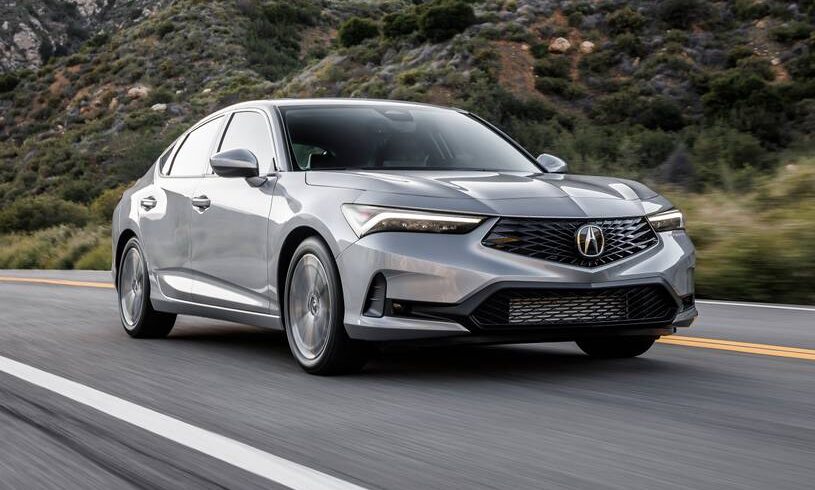
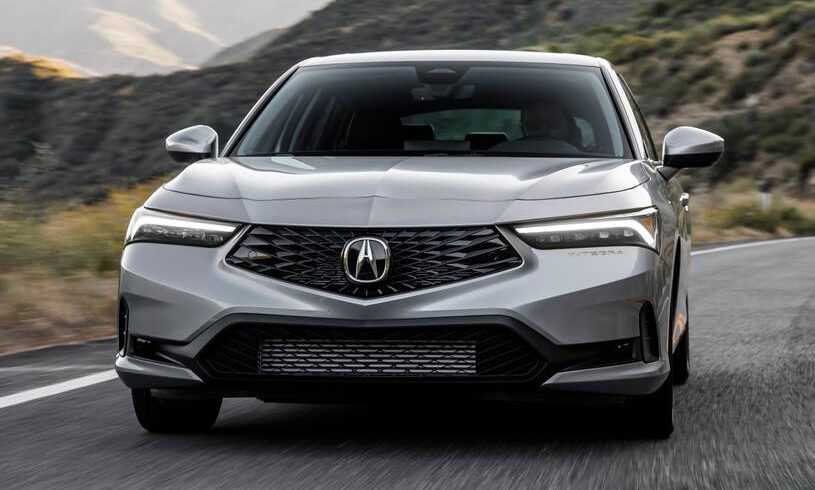
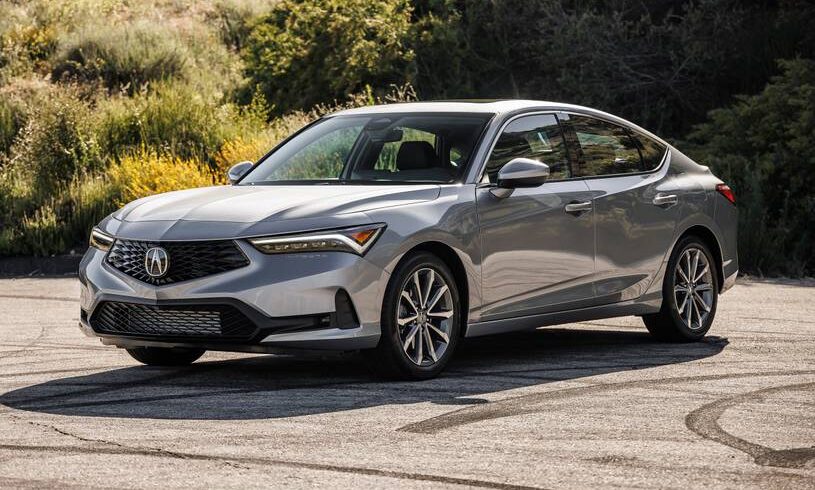
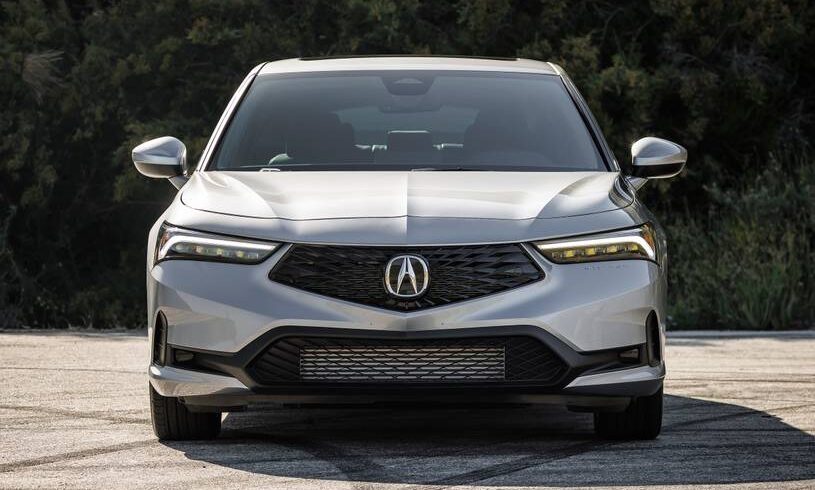
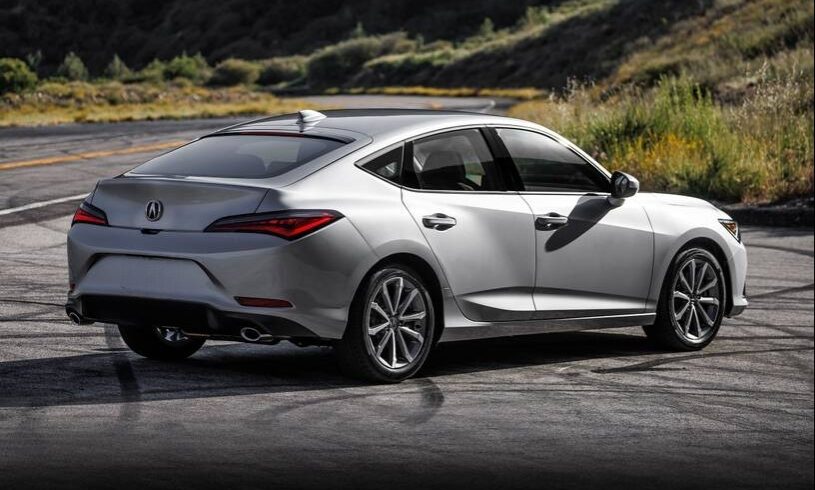
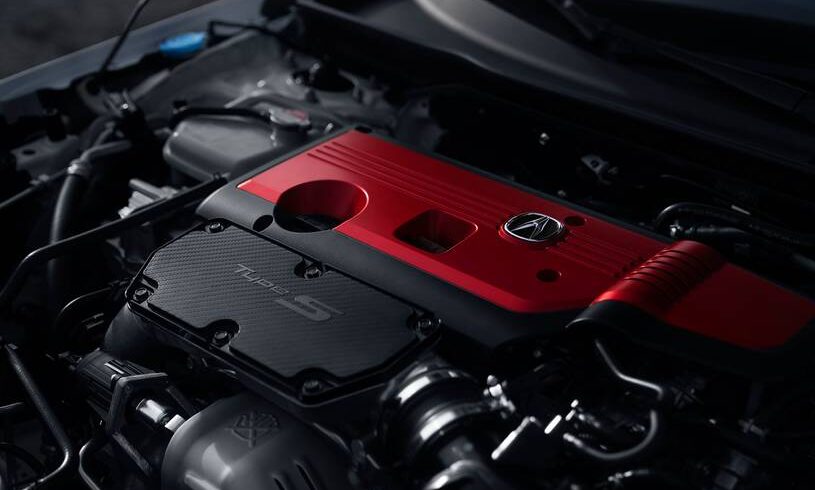
The 2025 Integra, Acura’s smallest and most affordable offering, resurrects a celebrated nameplate from the brand’s past and affixes it to what is essentially a very nice Honda Civic hatchback. The Integra shares its basic structure with the Honda but gets unique powertrain and suspension tuning, as well as a raft of upscale features. Its 200-hp turbocharged 1.5-liter four-cylinder is shared with the Civic Si, as is the six-speed manual transmission. Buyers not interested in a clutch pedal get a continuously variable automatic transmission (CVT) instead, which isn’t offered in the Civic Si at all.
Features & Options
Comfort
- A/C: Front
- A/C: Rear
- Backup Camera
- Cruise Control
- Navigation
Safety
- Airbag: Driver
- Airbag: Passenger
- Bluetooth
- Security System
Entertainment
- AM/FM Stereo
- CD Player
- DVD System
- MP3 Player
Seats
- Heated Seats
- Leather Interior
- Memory Seats
Windows
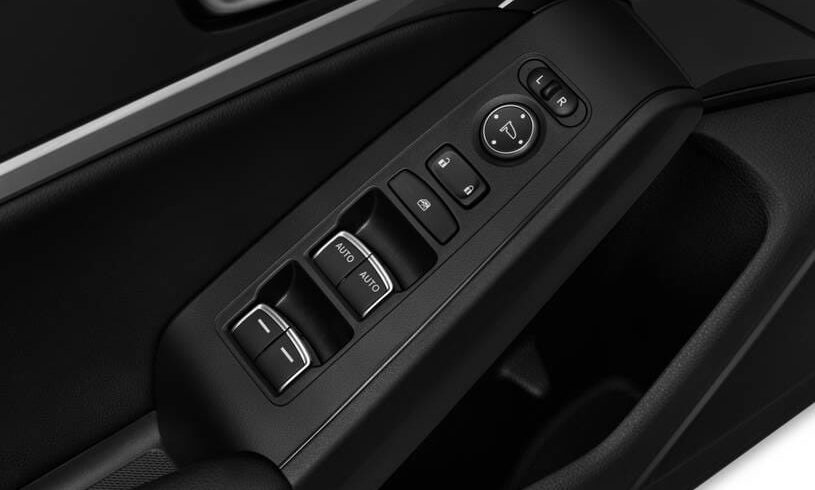
- Power Windows
- Rear Window
Technical
Performance
7.5/10
How does the Integra drive? We clocked the manual-shift Integra at 7.8 seconds to 60 mph, a disappointing result for an entry-level luxury car. It’s also roughly a half-second behind the Civic Si, which weighs a hundred pounds less and uses the exact same powertrain. The time would be quicker if second gear didn’t top out at about 55 mph, requiring a second shift, but we’re talking fractions of a second. In the real world, the Integra’s engine feels eager enough once you get past the notable turbo lag.
If you stay on it till redline, you’ll even hear faint echoes of Honda’s rev-happy engines of yore, though this one has the midrange torque that those classic non-turbo engines lacked. It could definitely use more power, though. We’re surprised Acura didn’t turn up the wick in order to separate the Integra from the Civic Si (or simply to help the Integra to keep up).
In our emergency braking test, the Integra needed an adequate 119 feet to stop from 60 mph, pipping a 2022 Audi A3 by 2 feet. Both cars had all-season tires. The Integra, unlike the Civic Si, cannot be equipped with summer tires from the factory, so you’ll need to shell out at the local tire shop if you want to unlock better stops.
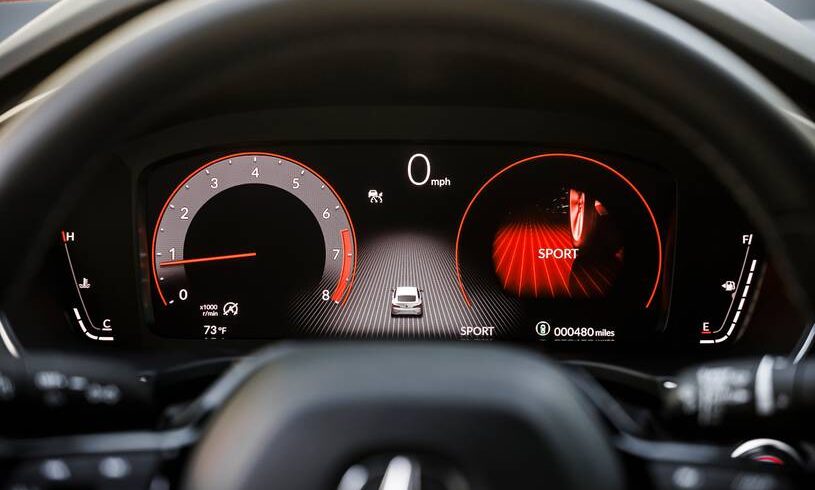
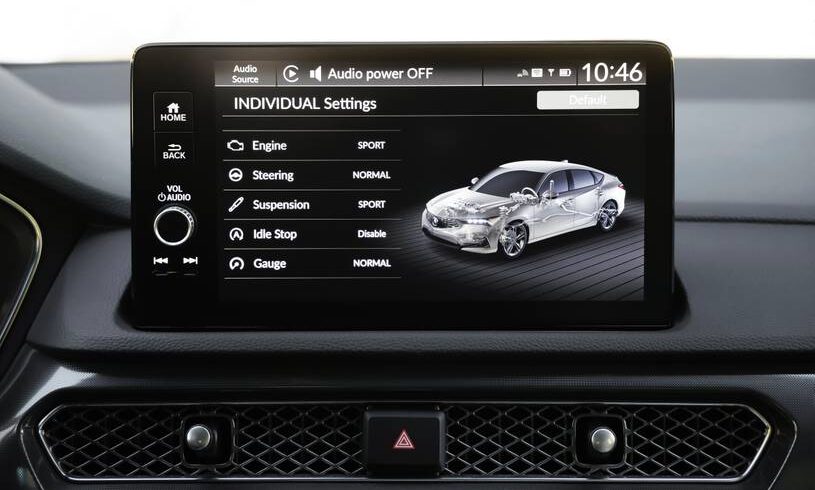
Same goes for the handling — you can feel the inherent goodness in the Integra’s chassis during spirited driving, but a quality set of summers would take it to another level. Although the Integra offers the adaptive suspension dampers that the Civic Si gave up for this generation, the difference between modes is subtle unless you’re really pushing it. We observed that the car was ultimately less capable on the skidpad in Normal versus Sport, with subjectively more body roll. But in everyday driving you’d be hard-pressed to feel which mode you’re in.
Comfort
7/10
How comfortable is the Integra? The adaptive suspension dampers are not standard on every Integra; you have to go with the A-Spec with Technology package to get them, which naturally inflates the price. Having said that, our A-Spec with Tech test car definitely had a more compliant ride than the non-adaptive Civic Si regardless of suspension mode. It’s still on the firm side for a luxury sedan, but it’s within range for a car at this price point. The Integra is also quieter inside than the Honda, but that is faint praise indeed. By luxury standards, there’s simply too much road noise in this car for comfort.
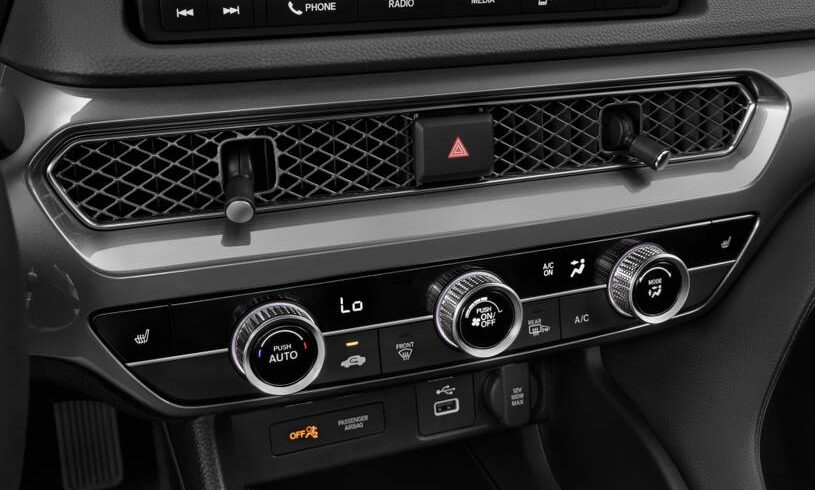
A small but significant selling point for the Acura vis-à-vis the Honda is the former’s power-adjustable driver lumbar support, but you must again spring for the A-Spec with Technology package to get it. A further slight to buyers of the lower trim levels is the manual — yes, manual — front passenger seat, which is upgraded to rudimentary four-way power if you decide to go all-in. Seat comfort is decent in general but nothing special, and there is no available upgrade to sport seats. The Integra’s A/C didn’t wow us either; it took a bit more time than expected to cool down the cabin on an unseasonably hot day (and lacked rear vents to boot).
Interior
8/10
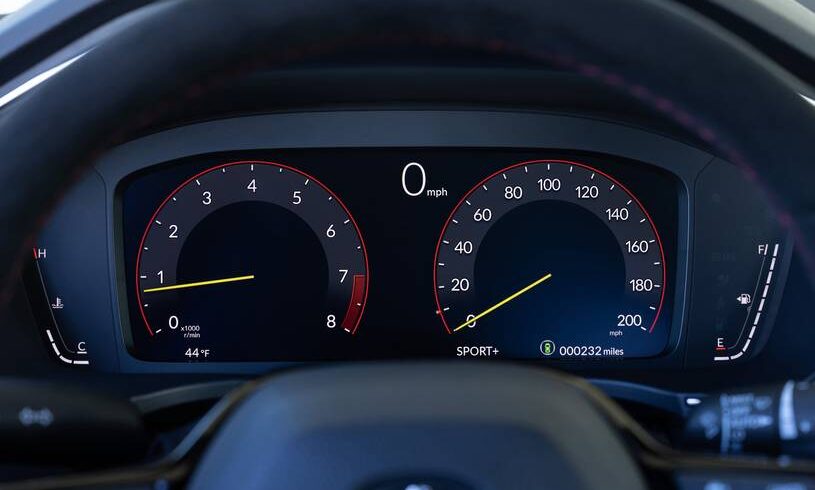
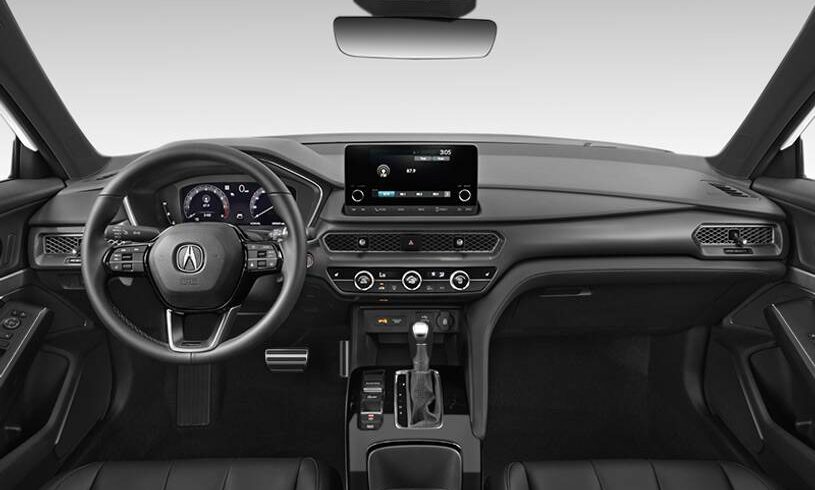
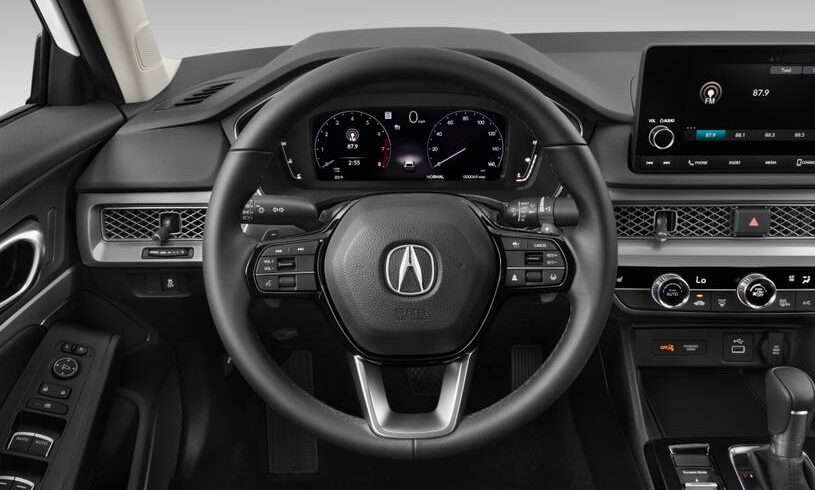
How’s the interior? The Integra’s interior is largely borrowed from the Civic Si. At a glance, they’re the same inside, separated only by the Integra’s additional color schemes and features. Fortunately, the current Civic has strong fundamentals for an economy car, but if you just test-drove an Audi A3, for example, the Integra will likely feel low-rent. Fans of classic Integras will note that although those models were also based on the Civic, they had unique interiors that made them feel more special.
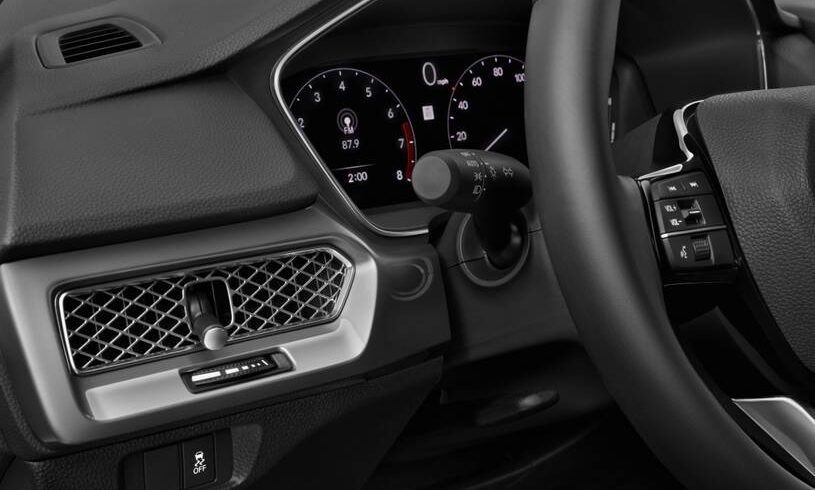
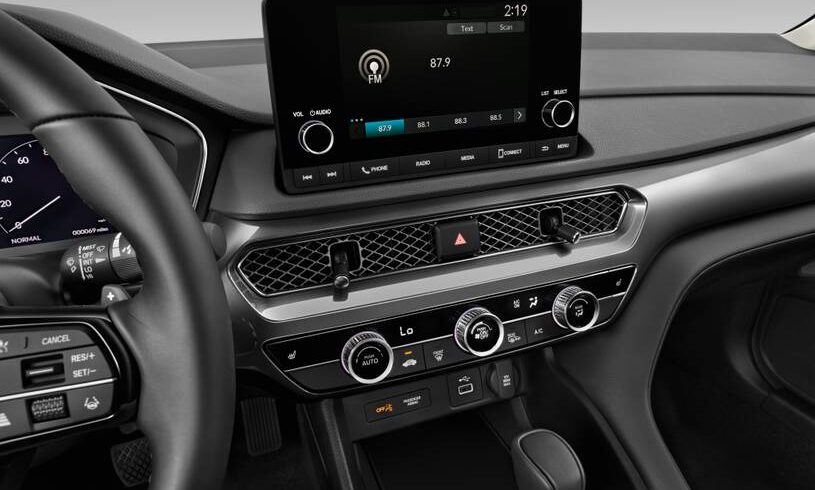
Again, the good news is that the Civic mostly gets it right, which means the Integra does, too. Visibility is clear in all directions, and the driving position is exemplary. Most controls are within an easy reach, though the touchscreen might be a stretch for taller drivers.
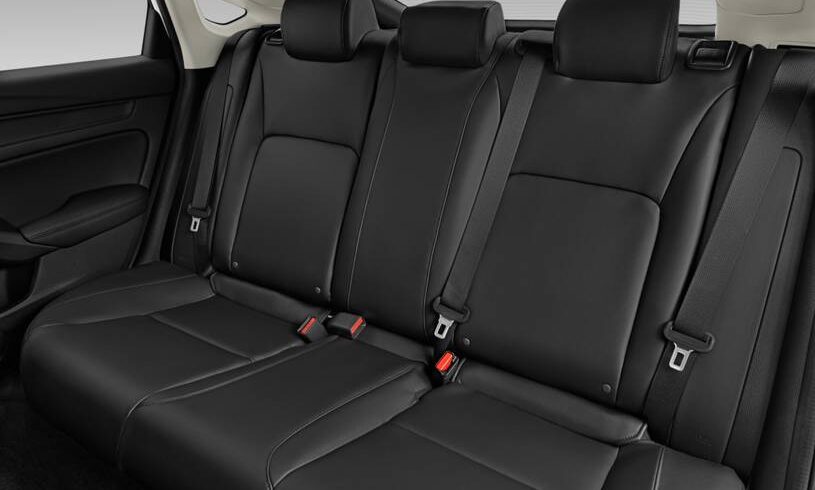
There’s ample legroom front and rear. It’s worth noting, though, that the Integra’s hatchback body takes a bite out of rear headroom compared to the Civic sedan
Technology
8/10
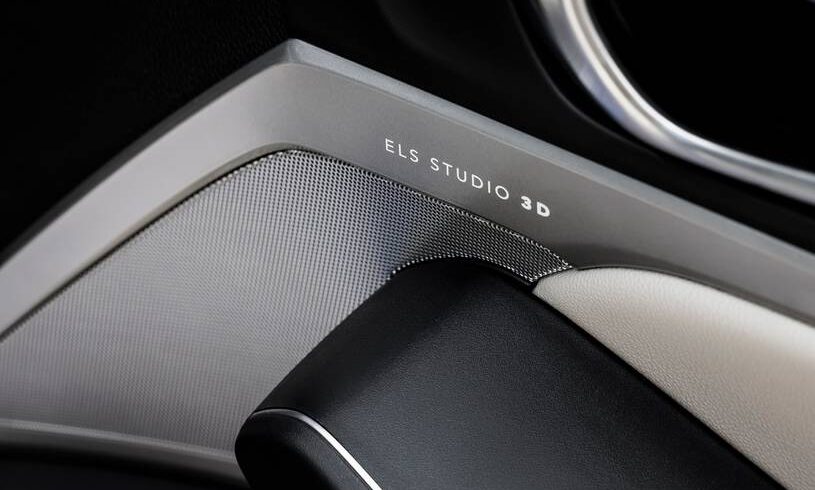
How’s the tech? The 9-inch touchscreen interface (7-inch on trims without the Technology package) pokes up out of the dashboard, making it easy to use while keeping your eyes mostly on the road. The screen responds quickly to inputs and has a contemporary look and feel aside from somewhat rudimentary navigation graphics. Our A-Spec with Tech package car had the ELS 3D audio upgrade, but it didn’t sound all that special. Crisper than the Civic Si’s Bose setup? Yes. A standout stereo among entry-level luxury cars? No.
All Integras come standard with adaptive cruise control and lane keeping assistance, which made for a rare bundle with our test car’s manual transmission. You do the shifting, and the car takes care of the rest. We had no real complaints. The adaptive cruise rarely overreacted to action up ahead, while the lane monitor seemed to have a good sense of where the car was between the lines.
Storage
8.5/10
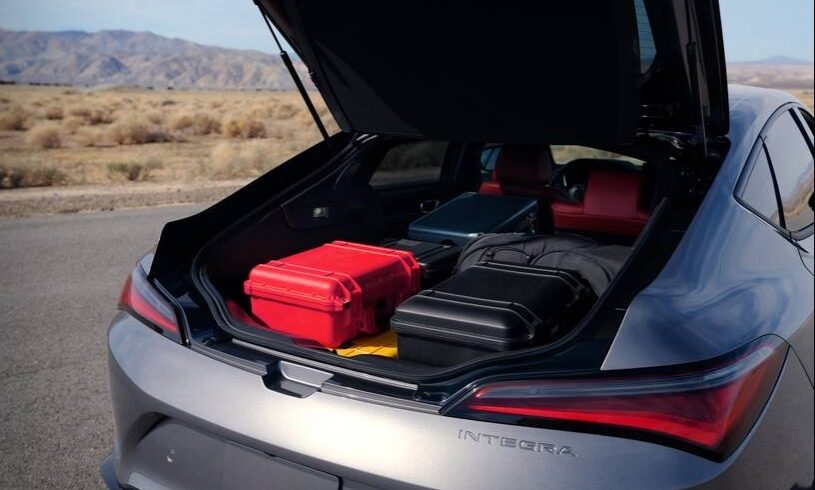
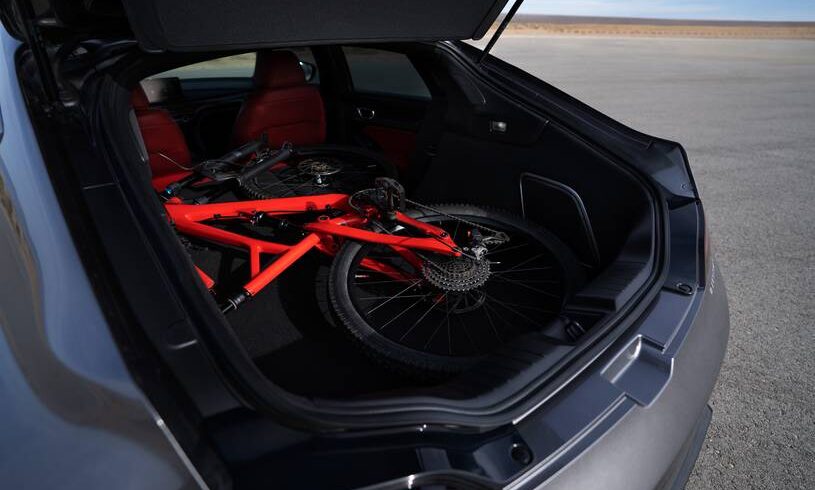
How’s the storage? The Integra’s hatchback cargo bay looks like it could swallow a lot of stuff with the rear seatbacks folded, although Acura does not provide a maximum cargo figure. It’s a meaningful upgrade over sedan rivals if you want a car that can haul. With the seatbacks in place, there’s a generous 24.3-cubic-foot cargo bay, which is approximately twice the capacity of the Audi A3.
In the cabin, there are plenty of cubbies and bins, highlighted by the center console between the front seats, which has storage space both ahead of the shifter and behind it as well as underneath the armrest. The generous rear legroom also lends itself to car seat installation — we clipped a rear-facing seat into the rear center position with no impact to front passengers in terms of seat positioning.
Fuel Economy
8/10
How’s the fuel economy? With the manual, the Integra gets an EPA-estimated 30 mpg combined (26 city/36 highway). On our 115-mile real-world evaluation route, the Integra validated those estimates with a 30.2-mpg run as measured at the pump. That’s not exceptional by current standards, but suffice it to say that owners are unlikely to complain about the Integra’s fuel economy. Should you find the CVT to your liking, it’s rated at 33 mpg combined (30 city/37 highway).
Value
6.5/10
Is the Integra a good value? Frankly, no. The Integra’s core challenge is convincing shoppers that they should pay significantly more than Civic Si money for essentially the same car, or else accept a CVT in a luxury car when all serious rivals offer more responsive automatic transmissions. It’s hard to make that argument on the merits. A little more differentiation in key areas — more power, less road noise, perhaps eschewing the Civic’s CVT for a conventional automatic — could have gone a long way. As things stand, the Integra seems stuck in a no-man’s land between the value-driven Civic lineup and true luxury models.
At least you get better warranty coverage with the Integra than the Civic, though the four-year/50,000-mile comprehensive warranty is just average for a luxury brand. The six-year/70,000-mile powertrain coverage is more impressive.
Wildcard
6.5/10
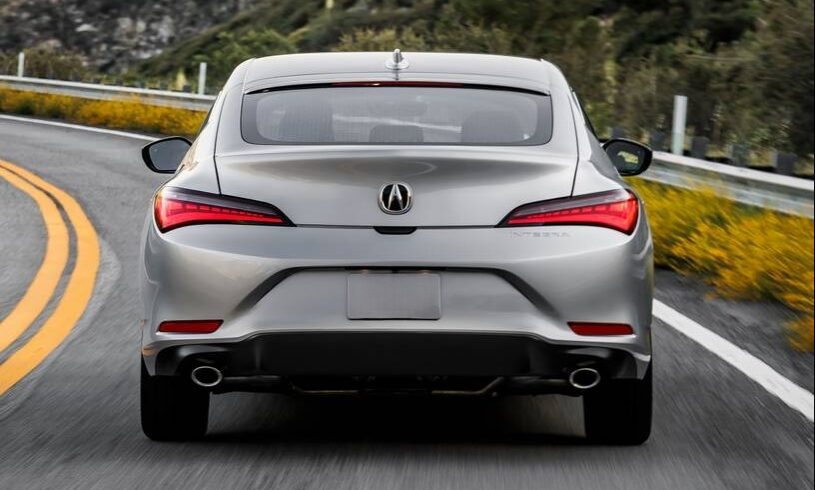
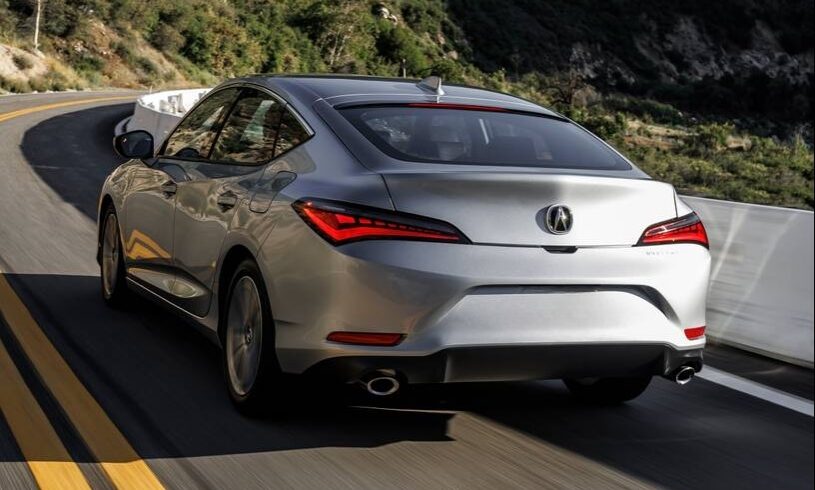
Many sport compact enthusiasts have fond memories of Integras past. Trouble is, the latest model just doesn’t distinguish itself in the same way. It’s not particularly luxurious or fun to drive, and the hatchback styling is generic. The Integra’s savior, however, is the Type S. The gains in performance and style up the Integra’s desirability considerably.
Similar Vehicles


- Petrol
- V6 Engine
- Hatchback


- Petrol
- V6 Engine
- Hatchback


- Petrol
- Inline 4-Cylinder (I4)
- Hatchback


- Petrol
- V6 Engine
- SUV


